


课程简介
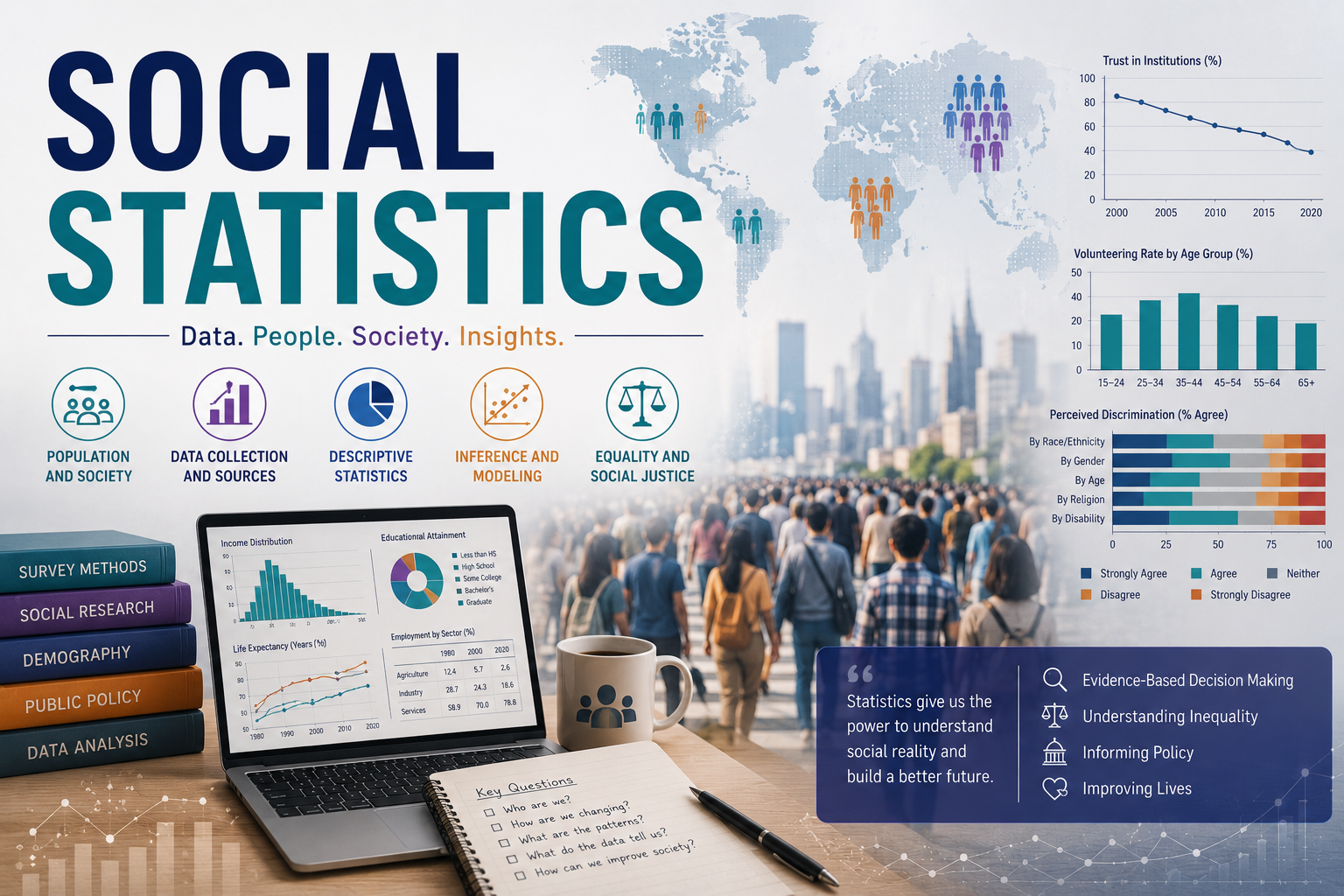
This course introduces the use of statistical reasoning in sociology to understand patterns and
relationships in social data. Students will learn how to organize and describe data, analyze
distributions, and examine associations between variables using tools such as cross-tabulation,
correlation, and regression. The course also covers foundational concepts in probability,
sampling, and hypothesis testing, enabling students to move from describing data to drawing
informed conclusions. Emphasis is placed on interpreting statistical results in meaningful social
contexts and developing practical skills for critically evaluating data in research, media, and
everyday life.